Your Personal
Data Vault.
One private place for your ID, your finances, and your documents, locked with a key only you hold. By default, not even Avallis can see inside. That is not a promise, it is how the vault is built. If you choose to turn on server-assisted verification, we can briefly read what a check needs, and you can turn it off at any time.
When a landlord, lender, or app needs proof, share the answer, not your paperwork. Prove you are over 18 or that your income qualifies without handing over a single document, and take access back whenever you want.

The data economy is
built against you
Across healthcare, finance, retail, and government — every industry treats your personal data as a commodity to extract, package, and sell. You are not the customer. You are the product.
You are the product
Across every industry, every app
Every time you sign up for a service, visit a doctor, use a loyalty program, or connect an account, your data is packaged and sold. Healthcare, retail, finance, social — it all feeds the same machine.
Aggregators own a copy of your life
You cannot see it. You cannot delete it.
Data aggregators and brokers pull from hundreds of sources — health, banking, shopping, government — and build permanent profiles on you. They monetize it without your knowledge and sell it without your consent.
Fragmented data, total exposure
Hundreds of databases. One breach hits all.
Your identity is scattered across healthcare, banking, credit, employment, government, and insurance systems. When any one is breached, the ripple is total — the pieces fit together into a complete profile of you.
The Consent Illusion
Every industryBuried consent checkboxes, 80-page privacy policies, and pre-ticked opt-ins are not consent — they are theater. Across healthcare, finance, retail, and government, you hand over your data to sign up, and lose control the moment you click agree.
Sources: U.S. Senate Commerce Committee · ITRC 2025 Annual Data Breach Report · Pew Research Center · industry estimates
Take back control of your data
For decades, companies have collected your personal data and asked you to trust them with it. Avallis reverses that. You hold your data, and you decide what is shared, with whom, and for how long. Businesses ask, and you answer.
The old model
Companies collect and hold
You hand over your details and lose sight of them. Copies spread across systems you never see, and all you can do is hope they are protected.
The Avallis model
You hold, businesses ask
Every share is a decision you made. You can see who has access, and you can take it back whenever you want.
Your data stays yours, and control is something you can see and use, not just a promise on a page.

Your Personal Data Vault
sealed, sovereign, on-chain
The platform replaces the broken model of scattered, sold, surveilled data with a single concept, the Personal Data Vault. Everything you store is locked in your browser with a key only you hold, and every change leaves a fingerprint on a public, tamper-proof record. If anyone altered your data, you could prove it, without taking our word for anything.
Your Personal Data Vault
A single encrypted container for your identity and financial data. One keyholder — you. No backdoors, no master keys, no exceptions.
Blockchain-Verified Integrity
Every change to your vault is cryptographically anchored on Polygon. If anything is altered without your consent, the blockchain proves it.
Consent-First Sharing
Grant selective, time-limited access to specific vault fields. Revoke at any time — and the blockchain records every grant and revocation.
Zero Data Sales. Ever.
We do not sell, license, or share your data. This is a structural constraint of the vault model — not just a policy.
Your Vault
256-bit key · your device only
All access controlled by you. Revoke anytime.
Complete Data Lifecycle
Your data doesn’t disappear
when you share it — until now.
Most platforms give you a way to share data. None give you a way to get it back. Avallis is the first vault where sharing is the beginning of a relationship you control — not the end.
Share on your terms
Approve any business data request with one tap. You see exactly what they're asking for, why, and for how long — before you decide. Every share is encrypted end-to-end to their server. Avallis never sees the data you share.
Loan applications · KYC · Insurance · Rentals · HR onboarding
See who has what
Your audit trail shows every business that received your data — when, what categories, and for what purpose. Blockchain-anchored. Not a log that can be edited. An immutable record that belongs to you.
Vault Saves · Consent Grants · Data Shares · API Verifications
Demand it back
One click sends a formal deletion request under applicable privacy law, including CCPA and GDPR where they apply. The business has 30 days to confirm they've deleted your data from their servers. You get an email confirmation — and an immutable audit record — when it's done.
30-day response window · Formal request · Email + audit confirmation
New
The first vault where you can
fire a business.
“End Relationship” is a single action that revokes all future access and sends a formal deletion request in one tap. No emails to legal teams. No waiting to see if they comply. A 30-day clock starts immediately, confirmed in writing.
End relationship with First National?
This will take the following actions
Revoke consent
Blocks future API access immediately
Request data deletion
30-day CCPA / GDPR deadline
From creation to
blockchain-verified sovereignty
Five steps to a Personal Data Vault that no one — not even us — can read, alter, or exploit without your explicit consent.
Create your Personal Data Vault
A 256-bit AES-GCM encryption key is generated in your browser — your device only, never our servers. Your vault is sealed before a single byte leaves your machine.
Populate your golden record
Add your identity, financial, and contact data. Everything is encrypted with your key. We store only ciphertext — mathematically unreadable without the key you hold.
Vault is encrypted and blockchain-anchored
Your data is encrypted in your browser using a key only you hold — before it leaves your device. It travels encrypted over a secure connection, so even an intercepted connection exposes only ciphertext that cannot be decrypted without your key. Avallis servers only ever store the encrypted result.
Blockchain anchors your vault
Each update generates a cryptographic fingerprint permanently recorded on the blockchain. No personal data on-chain — only the proof that your vault is intact.
Share on your terms
Grant selective, time-limited consent to apps, lenders, and employers. Every grant and revocation is logged on-chain. Revoke at any time — instantly and permanently.
Privacy should
not be a luxury
Your vault, all sharing, AI fraud protection, blockchain anchoring, enforcement, and Sentinel Intelligence — free. Everything shown below is included at no cost.
$0
No credit card. No trial period. No catch.
Identity Verification
One-time verification that upgrades your data to a trusted credential businesses can rely on — verify once, share unlimited times.
Identity
Name, DOB, address, SSN · $4.99 re-verify
$9.99
Contact — verified free
Verified at no cost from your confirmed email and phone.
Financial, Health, Travel — always free
Self-attested and fully shareable at no cost.
Every vault is free. You control what you share and with whom. You always own your data.
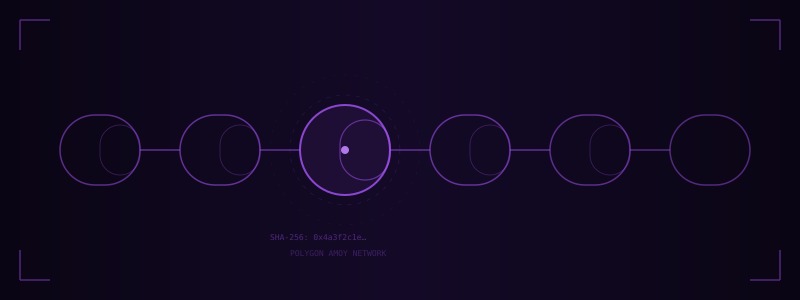
How blockchain secures
your Personal Data Vault
Most companies promise your data is safe. We make that claim verifiable — cryptographically and independently — through the Polygon blockchain. Here is exactly how it works, in plain English.
You update your vault
When you add or update data in your Personal Data Vault, the information is encrypted in your browser using a key only you hold — before it leaves your device. It then travels over a secure connection as ciphertext. Even if that connection were intercepted, an attacker would see only encrypted data they cannot read. We never receive or store your plaintext.
A hash fingerprint is created
The platform generates a cryptographic fingerprint of your encrypted record. This fingerprint uniquely represents your data — change a single character and the fingerprint changes entirely. No personal data is included.
The hash is anchored on Polygon
That fingerprint — and only the fingerprint — is written to a smart contract on the Polygon blockchain, a public, decentralized network with thousands of independent validators worldwide. No single entity controls it.
Tampering becomes provably detectable
If anyone — a hacker, a rogue employee, even our own servers — were to alter your stored data, the cryptographic fingerprint would no longer match what is on the blockchain. You can verify the integrity of your vault at any time, independently, without trusting us at all.
GDPR-Aligned by Design
Only cryptographic hashes touch the blockchain — never names, addresses, account numbers, or any personal data. The right to erasure applies to your vault data; the on-chain hash proves integrity but reveals nothing.
Zero-Knowledge Key Model
Your 256-bit encryption key is generated in your browser and shown to you once. It is never transmitted, stored, or accessible to us. We are structurally incapable of decrypting your vault. Even under legal compulsion, your vault contents cannot be produced in readable form because we never hold your key.
Polygon: Decentralized & Auditable
Polygon's smart contract stores your vault hashes. Because the contract is deployed on a public, decentralized blockchain, anyone can independently query it to verify your data integrity — including you, without our involvement.
Blockchain security — your questions answered
The identity authority
built for the post-CCPA world
Identity authority has always been held by institutions — credit bureaus, background check companies, data brokers. They built the infrastructure for themselves, and they hold your data without meaningful consent. That model is under regulatory pressure from every major jurisdiction. Avallis is what replaces it.
User-owned credentials
Every verified fact lives in the user's encrypted vault — not in a corporate database. Users grant access. Users revoke access. The credential travels with the person, not the institution.
Consent on the blockchain
Every data access event is anchored on Polygon — creating a tamper-proof, timestamped record of what was shared, with whom, when, and why. Not a log in a database. An immutable proof.
Verification without exposure
The zero-PII API answers business questions — "is this person over 18?", "does their income qualify?" — server-side, without raw data ever leaving the vault. Businesses get certainty. Users keep privacy.
Reusable across institutions
A user verified once by Bank A doesn't re-verify for Bank B. Their Avallis vault carries a timestamped certificate issued by an independent verification engine. Onboarding that took days can complete in seconds.
The regulatory tailwind
When regulators mandate consent, Avallis is already there
The CCPA, GLBA Safeguards Rule, state biometric laws, and the FTC's ongoing data broker crackdown are all converging on the same conclusion: companies cannot hold and monetize personal data without explicit consent. The legacy data broker model is on borrowed time.
Avallis is built consent-first by architecture — not by policy retrofit. Every access is user-authorized. Every consent is blockchain-anchored. When the regulatory standard requires this, the institutions that integrated Avallis will already be compliant.
CCPA / CPRA
Right to opt out of data sale — we have no data to sell
GLBA Safeguards
Customer data must be protected. Vault architecture aligned with Safeguards requirements
GDPR Article 7
Consent must be explicit and revocable — blockchain-anchored per request
FTC Data Broker Rule
Registration + opt-out requirements — we are not a data broker
Old model vs. Avallis
| Aspect | Traditional model | Avallis |
|---|---|---|
| Who holds the data | Data brokers and credit bureaus | The individual — in their encrypted vault |
| How consent is captured | Buried in terms of service | Explicit, blockchain-anchored, per-request |
| What businesses receive | Raw PII pulled from broker databases | Verified results, or only the data the user approves |
| Breach liability | Yours — you hold the PII | Far lower — you hold far less PII |
| Regulatory trajectory | Increasingly hostile (CCPA, GLBA) | Aligned by architecture, not retrofit |
| User relationship | Adversarial — data extracted without consent | Aligned — user controls the credential |
More users → more valuable to businesses
Every user who verifies on Avallis adds to the network. Every business that integrates makes the Avallis credential worth more to users. The flywheel runs in both directions simultaneously.
Verified once, trusted everywhere
A user who completes verification on Avallis carries it to every institution. Bank A's verification becomes valid at Bank B, Landlord C, and Employer D — reducing onboarding cost across the entire network.
User alignment is the competitive moat
Legacy identity authorities extract value from users. Avallis is structurally aligned with users — the product gets better for them the more they use it. That's a moat incumbents cannot replicate without rebuilding from scratch.
The identity infrastructure the post-CCPA world requires already exists. Join the users and businesses building on it.
Nothing to phish.
No password to steal.
Your vault has no password, so there is nothing to leak, reuse, or trick out of you. Your key signs you in with cryptographic proof, which is why we never needed to bolt on MFA in the first place. Here is the old model next to ours.
Traditional security
Password + MFA + hope the company holds up
Passwords
Phished, reused, breached — billions stolen every year
MFA / TOTP
SIM-swapped, intercepted mid-login, a band-aid over broken auth
Server-side storage
Your data sits in cleartext databases that can be breached, sold, or subpoenaed
Trust the company
"We protect your data" is a promise with no proof — until the breach announcement
Avallis security
Cryptographic proof — no trust required
Your encryption key
Replaces passwordsA 256-bit key generated in your browser — never transmitted. Even if our servers vanish overnight, your key still unlocks your data.
Key signature
Replaces MFASigning with a private key proves identity without sending a password. Nothing to phish, intercept, or SIM-swap — cryptographic proof at the protocol level.
Client-side encryption
Replaces server trustYour data is encrypted in your browser before it reaches our servers. We store ciphertext — mathematically unreadable without your key. A breach of our infrastructure exposes nothing.
Blockchain integrity proof
Replaces trust in usEvery vault update anchors a cryptographic fingerprint on the blockchain. Tamper detection is public, permanent, and independent — no company promise required.
The math is the security.
AES-256 is the encryption standard trusted by banks and governments worldwide. Blockchain anchoring makes silent tampering independently detectable. This is not a policy promise. It is cryptography.
About the MetaMask signature request
When you sign in, MetaMask asks you to sign a short message — not a transaction. This proves you own your Sovereign Key without moving any funds or granting any spending permissions. Here is why it is safe:
Identity only
No transaction, no funds moved. MetaMask shows it as a Signature Request, never a transaction.
Expires in 5 min
A timestamp is embedded. The server rejects any signature older than 5 minutes — useless if intercepted.
Memory only
Cached for 4 minutes in browser memory to avoid repeated prompts. Never written to disk, localStorage, or any server.
About your Sovereign Key ID
Connecting MetaMask means Avallis can see your public Sovereign Key ID. That is a fair thing to wonder about — here is exactly what it does and does not mean:
Already public
Your Sovereign Key ID is visible on-chain to anyone right now — balance, history, everything. Avallis storing it exposes nothing new.
Your keys, your funds
Only your private key and seed phrase control your Sovereign Key, and those never leave MetaMask. Avallis cannot move funds or access it in any way.
Stored, protected
We keep your Sovereign Key ID only to recognize you on future logins — encrypted at rest, never shared, never linked to your identity outside your own vault.
Privacy built on mathematics,
not policy.
Every claim on this page is verifiable. The encryption is standard. The blockchain is public. The architecture is open.
2²⁵⁶
possible encryption keys
More than atoms in the observable universe. Your vault key is chosen from this space. Guessing it is not a realistic attack surface.
Continuous
tamper monitoring
Every vault record is anchored on the blockchain. Any silent modification is independently detectable — not a promise from Avallis, a cryptographic proof.
Real-time
Sentinel Intelligence
Multiple risk signals — behavioral, geographic, and compliance-based — are evaluated on every access event by AI-powered Sentinel Intelligence.
Zero-knowledge means zero access — for us too.
Data is encrypted in your browser using a key only you hold — before it leaves your device or travels over any connection. Even if traffic were intercepted, an attacker sees only ciphertext meaningless without your key. Here is exactly what each party holds.
What Avallis holds
What you hold
An encrypted blob of bytes
Your name and date of birth
A blockchain fingerprint hash
Your Social Security Number
A consent approval timestamp
Your income and bank balance
An expiration date
Your government ID
A business request ID
Your health insurance details
Identity sharing is broken. Here is what we changed.
Every row below is a decision Avallis made differently — and why.
Where your data lives
Before
Copied into the business's database — indefinitely
Avallis
Stays in your encrypted vault. Businesses receive approved, time-limited access.
Who controls access
Before
The business decides what they keep and for how long
Avallis
You approve every request. You set the time limit. You revoke at any time.
Audit trail
Before
None — you have no visibility into who has your data or what they did with it
Avallis
Every access logged permanently. Your dashboard shows exactly who saw what and when.
Revocation
Before
Practically impossible — no standard mechanism exists
Avallis
One tap. Consent revoked and confirmed. Business webhook notified immediately.
Tamper detection
Before
None — a breach may go undetected for months
Avallis
Every record anchored on the blockchain. Any tampering is detectable immediately — independently verifiable without trusting Avallis.
The math is the security. Not a feature list.



Create your Personal
Data Vault today
Reclaim your data sovereignty. Your vault is free to create, encrypted from day one, and anchored on the blockchain.
Your key. Your data. Your vault.